
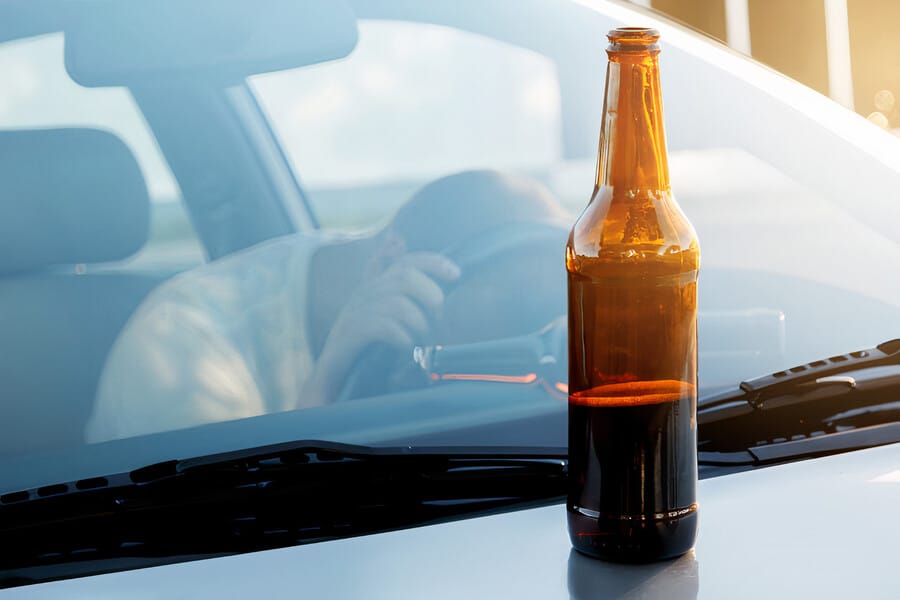

Being caught at the wheel while intoxicated carries strict consequences under both provincial and federal law. If you were recently pulled over and want to know where Ontario draws the line, the answer is straightforward: if your blood alcohol content (BAC) is at or over the legal limit of 80 milligrams of alcohol per 100 millilitres of blood (0.08), that is a criminal offence. The limit applies everywhere in Canada, and if yours was over it, contact an experienced impaired driving lawyer to build the strongest defence for your case.
When you’ve been charged with a DUI, it’s not something you want to face on your own. Too many things can go wrong, and unless you know the criminal code inside out, there’s a real chance of ending up with the harshest penalties available. Any lawyer won’t do. You’ll need a DUI lawyer with a proven track record in DUI cases.
DUI Levels In Southern Ontario
Section 320.14(1) of the Criminal Code governs impaired driving. It states that operating any motor vehicle while impaired, whether moving or stationary, is an offence.
It also sets the limits on legal blood alcohol content. You cannot have a blood alcohol content above 80 mg per 100 ml of blood.
Types of DUI Charges in Southern Ontario
Under Section 320.14(1), DUI charges fall into several distinct categories:
- Driving while impaired.
- Operating a vehicle under the influence.
- Having a blood alcohol content above 80 mg.
- Not providing a breath sample.
- Care and control.
- Numerous DUI offences.
The charge you face will depend on the specific facts of your case, and each carries its own set of consequences.
Consequences of a DUI Conviction
A DUI conviction can affect nearly every area of your life. Depending on your case, you could face any of the following:
- Jail time.
- A driver’s licence suspension.
- Fines.
- Travel restrictions to certain countries.
- Loss of income.
The severity of these consequences depends on how many prior offences you have and the specific circumstances of the incident.
Southern Ontario DUI Legalities
The charges will be based on what the officer observed and recorded at the scene. Evidence will be brought into court, and witnesses can be cross-examined.
An experienced lawyer can build a solid defence by examining how the evidence was gathered. Blood samples cannot be taken more than two hours after you were stopped, and must be collected in intervals of around fifteen minutes.
There are also requirements around the instruments used in DUI cases. They need to be approved, calibrated, and in working order. A device must typically display a “warn” result when blood alcohol is in the 50–99 mg per 100 mL range (0.05–0.099) and a “fail” at 100 mg per 100 mL (0.10) or above — while the criminal “over 80” limit itself is 80 mg per 100 mL (0.08). Only certified technicians can operate these instruments for the results to be admissible in court.
If you did not consent to testing, the Crown must prove that you were clearly informed of the request before the tests were administered.
What Are The Fines Involved In A DUI Case?
On top of jail time, a licence suspension, and a probation order, a DUI conviction comes with mandatory fines. Every province has its own laws, but the penalties across Canada are severe. In Southern Ontario, the minimums are:
- First offence: a $1,000 fine and one year of driving probation.
- Second offence: one month in jail and two years of driving probation.
- Any subsequent offence: four months in jail and three years of driving probation.
These are the minimums. Penalties can go higher depending on the circumstances of your case.
Getting a skilled Toronto DUI lawyer is the best way to avoid these outcomes. The prosecutor’s job is to find you guilty of the offence. Your defence lawyer’s job is to find the gaps in the case that undermine it. Some of those gaps include:
- Arbitrary detention.
- Your right to be informed of what’s going on.
- Your right to a lawyer.
If an officer searched your vehicle without a warrant, your lawyer can also raise a defence based on unlawful search and seizure.
Ask any lawyer you’re considering what their success rate is in DUI cases before you hire them.