


Table of Contents
- 1 Uber DUI Case in Toronto: What Happened
- 2 Legal Issues Specific to Rideshare Drivers
- 3 Professional Consequences for Uber Drivers After DUI
- 4 Civil Liability: The Exposure That Does Not Exist in Ordinary DUI Cases
- 5 What Defence Looks Like
- 6 The Main Takeaways From This Toronto DUI Case
- 7 Conclusion
- 8 Toronto DUI Case: Uber Driver Charged on the Job FAQ
- 8.1 Can an Uber driver be charged with DUI even if no accident occurred?
- 8.2 What happens to the passenger in the vehicle when the driver is charged?
- 8.3 If the Uber driver is charged but not convicted, can they keep driving for Uber?
- 8.4 Does being an Uber driver affect the DUI defence strategy?
- 8.5 How long does a DUI conviction stay on record in Canada?
Most people think of calling an Uber as the responsible choice after a night out, the perfect way to avoid the risk of getting charged. Yet, this DUI case in Toronto turns that assumption on its head: the Uber driver herself was facing an impaired driving charge.
When a professional driver who earns income behind the wheel gets a DUI charge while actively logged into a rideshare platform, the consequences multiply quickly. There is the criminal charge. There is the permanent loss of livelihood. There is also civil exposure if a passenger is in the vehicle. And there is the specific, unforgiving way that rideshare companies treat any driver who faces such allegations.
Uber DUI Case in Toronto: What Happened
An Uber driver in Toronto was charged with impaired driving under the Criminal Code of Canada while logged into the Uber platform. The charge arose after a traffic stop in which the responding officer observed indicators of impairment. The driver was carrying a passenger, and the test showed a blood alcohol content (BAC) much over the legal limit.
They faced the criminal process that every person charged with impaired driving must face, but also the professional consequences. That includes the loss of their Uber account, potential civil liability, and consequences tied to driving record status.
One of the most important things to understand about this case is that there is no special treatment. Under the Criminal Code of Canada, the two most common impaired driving charges are:
- Section 320.14(1)(a) (Impaired Driving): Operating a vehicle while alcohol or a drug impairs your ability to drive, to any degree
- Section 320.14(1)(b) (Over 80): Operating a vehicle with a blood alcohol concentration (BAC) at or above 80mg per 100mL of blood.
These provisions apply equally to every person behind the wheel, whether it is a first-time driver on a Friday night or a professional rideshare operator who drives for a living. Being a paid driver does not create a lesser offence. Courts often view professional drivers with more scrutiny precisely because the court expects them to understand and uphold a higher standard of road safety.
In practical terms, the Uber driver in this case was subject to the full weight of criminal impaired driving law, with no reduction in culpability for the professional context.
Professional Consequences for Uber Drivers After DUI
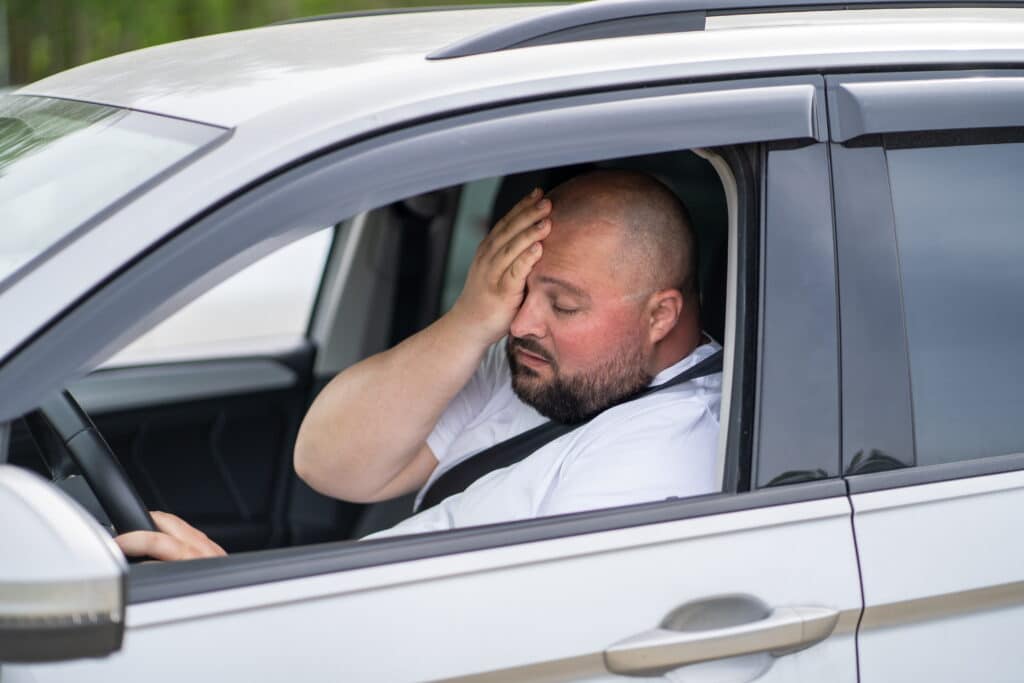
The criminal court is only one arena. For rideshare drivers, the Uber platform itself operates as a parallel form of accountability. In some ways, it moves faster than the courts.
Immediate Account Deactivation
Uber’s safety and community guidelines require drivers to report criminal charges. A charge of impaired driving is precisely the kind of serious offence that triggers this obligation. Failure to self-report is grounds for permanent deactivation. Even if the driver reports the incident, the platform may suspend their account until the court decides the outcome.
Periodic Background Checks
Rideshare platforms conduct ongoing background checks, not just at onboarding, but occasionally throughout a driver’s time on the platform. A criminal conviction for impaired driving will appear on a background check and will end a driver’s ability to work on any major rideshare platform in Canada.
CVOR Implications
Drivers who hold a Commercial Vehicle Operator’s Registration (CVOR) may face additional regulatory consequences. While a standard Uber driver typically operates under a personal licence, any driver who holds or needs a commercial designation faces further scrutiny from the Ministry of Transportation of Ontario following an impaired driving charge.
Civil Liability: The Exposure That Does Not Exist in Ordinary DUI Cases
If a passenger was in the vehicle at the time of the impaired driving incident, the legal exposure extends further into civil law territory.
A passenger who is injured, or who can establish psychological harm from being unknowingly placed in a vehicle with an impaired driver, may have grounds for a civil claim against the driver personally.
Claims could also potentially be directed at the platform itself. It depends on their specific liability framework and the circumstances of the incident. This is a dimension of risk that does not arise in a typical DUI scenario involving only the driver. It substantially raises the stakes and can result in financial exposure well beyond anything the criminal process alone would impose.
What Defence Looks Like
A DUI charge, even one involving a professional driver or a passenger, is not automatically a conviction. The role of a skilled DUI defence lawyer is to examine every element of the case from the first moment of police contact to the final breath sample. In a case like this, the defence examines the following:
| Reason for the traffic stop | Was there a lawful basis for the officer to pull the vehicle over? If the stop was arbitrary or unsupported by the evidence, everything that follows may be challengeable. |
| Sobriety observations | What specific signs of impairment did the officer record? Were they objectively documented and consistent with established impairment indicators, or are they vague and open to challenge? |
| Roadside screening process | Was an Approved Screening Device (ASD) used? Was the demand lawful? Was the device properly calibrated? Were there any delays or procedural errors in the screening process? |
| Evidentiary breath test | At the police station, was an Approved Instrument used? Was it in proper working order? Were the required wait times observed? Were two samples taken at the required interval? Any error in this process may affect the admissibility of the results. |
| Charter rights compliance | Was the driver informed of the right to retain and instruct counsel without delay? Was a genuine opportunity provided to contact a lawyer before the evidentiary breath test? A breach of the right to counsel under Section 10(b) of the Canadian Charter of Rights and Freedoms can result in the exclusion of breath evidence entirely. |
None of these defences are hypothetical. They are the result of rigorous procedural requirements that law enforcement must satisfy. When they fail to do so, the consequences for the Crown’s case can be decisive.

The Main Takeaways From This Toronto DUI Case
This case is not just a cautionary tale for the driver. It carries practical lessons for every rideshare driver working in Toronto and for every passenger who relies on these platforms to get home safely. The criminal charge is the headline, but the ripple effects extend well beyond the courtroom.
If you drive for Uber or any rideshare platform, this case is a clear statement of where the law stands and what is at stake the moment you log in.
Zero tolerance while logged in. The moment you log into a rideshare platform, you are a professional driver operating in a commercial capacity. There is no acceptable BAC. There is no “just one drink” calculation that is safe to make.
Your professional status does not protect you. Quite the opposite. Courts may view an impaired rideshare driver more harshly than an ordinary driver, because the public trust placed in a hired driver makes the conduct more egregious.
The consequences extend far beyond the criminal process. A conviction ends your ability to drive for any rideshare platform permanently. It may affect your insurance and lead to civil claims if the incident injured the passenger. It also creates a criminal record that follows you into every future background check.
Act immediately if charged. The earlier you retain an experienced Toronto DUI lawyer, the more options you have. Evidence is time-sensitive. Charter arguments must be properly developed. The criminal process moves whether you are ready or not.
For Passengers
Passengers are not passive bystanders in the rideshare safety equation. You have both the right and the means to act if something feels wrong before or during a trip. If you suspect the driver has been drinking, you can:
- Refuse a ride. If something feels wrong and your driver seems impaired, disoriented, or otherwise unsafe, cancel the trip immediately. Your safety is more important than the inconvenience.
- Call 911. An impaired driver operating a rideshare vehicle is a danger to you, to other drivers, and to pedestrians. Do not wait. Reporting a potentially impaired driver to police is the right call.
- Report through the Uber app. Uber has safety reporting features built into the platform. A report creates a record and may protect others from the same driver.
Conclusion
Rideshare platforms depend on public trust. If passengers stay silent, that trust breaks down for everyone. Reporting is not an overreaction. It is the system working as it should. This case is a reminder that impaired driving does not only happen on isolated roads late at night. It can happen in the back of an app-dispatched vehicle in the middle of a city. Awareness on both sides of the transaction is what keeps people safe.
Every DUI case in Toronto follows a process that imposes strict obligations on police, on the equipment used to gather evidence, and on how officials handle the accused’s rights from the first moment of detention. A criminal record, a mandatory driving prohibition, potential jail time, and travel restrictions to the United States are all at stake. Because the stakes are so high, Canadian law does not simply ask whether a driver was impaired. It also requires that authorities gather evidence lawfully and meet every procedural requirement at each stage.
Toronto DUI Case: Uber Driver Charged on the Job FAQ
-
Can an Uber driver be charged with DUI even if no accident occurred?
Yes. Impaired driving under the Criminal Code is an offence based on the act of operating a vehicle while impaired, not on whether any harm resulted. A driver can be charged and convicted based solely on their BAC reading or the officer's observations of impairment, with no accident or injury required.
-
What happens to the passenger in the vehicle when the driver is charged?
The passenger is not charged with any offence. Police may speak with the passenger as a potential witness to the driver's condition or behaviour. The passenger's account could become part of the Crown's case, or could support the defence, depending on what they observed.
-
If the Uber driver is charged but not convicted, can they keep driving for Uber?
Not necessarily. Uber may suspend a driver's account pending the outcome of criminal proceedings, and its policies around reinstatement are discretionary. A charge without a conviction does not automatically result in permanent deactivation, but there is no guarantee of reinstatement either. The platform makes those decisions independently of the criminal courts.
-
Does being an Uber driver affect the DUI defence strategy?
The criminal defence strategy is largely the same as in any impaired driving case: it turns on the evidence, the procedure, and any Charter issues. However, the professional context raises the stakes considerably, which is precisely why it is essential to retain experienced DUI defence counsel as early as possible. The consequences of a conviction, including loss of livelihood, civil exposure, and a permanent criminal record, make every procedural argument more important.
-
How long does a DUI conviction stay on record in Canada?
A DUI conviction results in a permanent criminal record. A record suspension (formerly called a pardon) may be applied for five years after the completion of the sentence for a summary offence, or ten years for an indictable offence, though it is not automatic and must be applied for separately through the Parole Board of Canada.