

Table of Contents
- 1 Legal and Personal DUI Consequences
- 2 First-Time and Repeat Offences
- 3 What Happens When You Are Pulled Over for Suspected DUI
- 4 Why You Can Be Charged With Drinking and Driving in Canada
- 5 Drinking and Driving Statistics in Canada
- 6 Myths About Drinking and Driving
- 7 How to Avoid Drinking and Driving
- 8 When You Should Contact a DUI Lawyer in Toronto
- 9 Conclusion
- 10 How Does Drinking and Driving Affect Your Life FAQ
Drinking and driving is a very serious offense. A lot of the time, people think that if they get caught drinking and driving, they’ll simply be given a ticket, then pay that ticket and move on with their lives. That’s not the case whatsoever.
Legal and Personal DUI Consequences
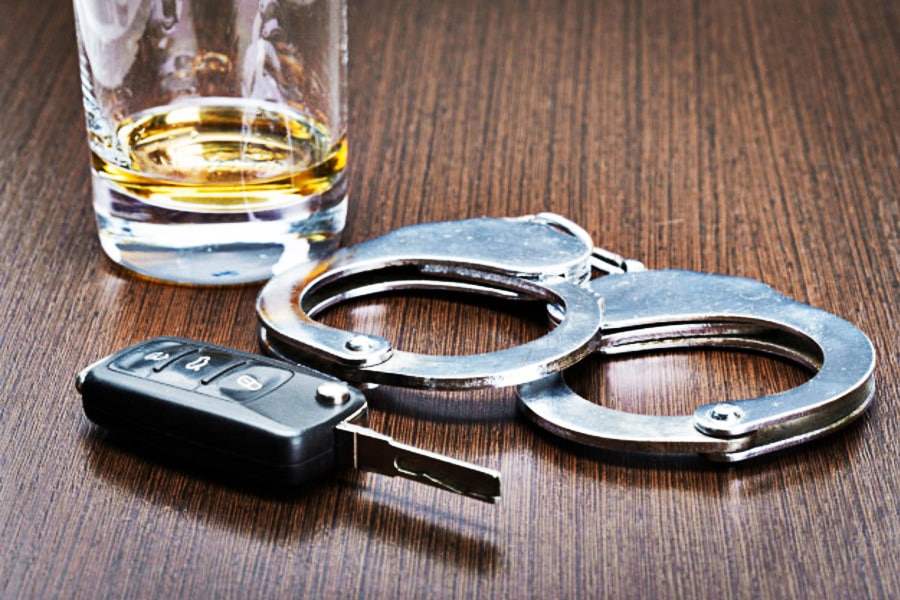
A DUI is nothing like a speeding ticket. It’s a criminal offense. A DUI conviction in Ontario alters your life in ways that most people don’t anticipate until they’re already facing the charge with consequences like:
- Jail time and criminal record
- Employment issues
- Fines and penalties
- Licence suspension
Each consequence triggers a new one: a suspension changes your employment options, a criminal record alters how institutions evaluate you, and insurance penalties reshape your finances for years.
DUI and employment
If convicted, a DUI charge may ruin your career and your future employment opportunities. They’re long-lasting and very hard to remove from your record. In fact, a DUI in Ontario stays on your record forever. Even if you’re pardoned, it won’t be erased, that section of your record will simply be closed. Meaning even though nobody can see it, your employers can see that you were pardoned for something serious and may even ask you about it.
Fines and DUI financial penalties
Drinking and driving have some severe consequences. If you’re convicted, you’ll be subject to a wide array of penalties and punishments. First of all, it’s very common for offenders to be charged thousands of dollars.
Losing your licence
Secondly, you’ll also most likely lose your license. Most of the time the license is actually taken away from you rather than just a temporary suspension. The only way to get it back is to go through the entire graduated licensing system all over again.
In Canada, this means you have to go through your G1 testing, your G2 testing, and finally your full G. If you also have a truckers license, a motorcycle license, or even a boat license, you may lose those as well and have to do those tests all over again as well.
Jail sentence
The third common penalty is jail time. Jail time is usually reserved for those who cause damage and or bodily harm. If you seriously injure someone else while drinking and driving, be prepared for a quick conviction and a heavy jail sentence. If there was a fatal incident involved, you may face 10 to 15 years in prison.
First-Time and Repeat Offences
If you are a first-time offender, the charge will go on your record permanently if convicted. You’ll also be given a steep fine, and may even have your license temporarily revoked. Usually, you won’t have to redo the graduated licensing system, but in some cases, you will. Do keep in mind that if you harm someone or cause property damage, whether city or privately owned, these penalties go upwards.
If you are a repeat offender, you will almost certainly have your license revoked. You’ll be forced to pay steep fines, and you will most likely be given jail time. The amount of time behind bars varies between 30 and 120 days for repeat offenders. Again, if you do severe damage or cause injury and/or death, the time goes upwards into the year range and onwards. Refer to the table below to compare possible DUI consequences.
| Consequence | First Offence | Repeat Offence | Severe cases |
| Fines | $1,000+ | Often several thousand | Higher fines + restitution may apply |
| License Status | Possible suspension | Mandatory suspension, often long-term | Revocation, full re-testing required |
| Jail Time | Rare | 30–120 days | 10–15 years or more |
| Criminal Record | Permanent | Permanent | Permanent |
| Insurance | Significant increase | Extreme increase | Extreme increase |
| Re-licensing | Sometimes required | Almost always required | Always required |
Note that these vary depending on your case, how you defend yourself, what you say, and how you conduct yourself after the incident. Contact a DUI lawyer Toronto as soon as possible to avoid serious complications.
What Happens When You Are Pulled Over for Suspected DUI
A lot of people ask us what it’s like to actually get caught drinking and driving. Officers follow specific steps designed to quickly determine whether you’re impaired and whether further testing is required. The whole process usually involves:
- Initial testing when officers administer a breathalyzer or, if unavailable, a roadside sobriety test
- Transport to a police station if you fail the roadside assessment
- Official testing procedures via more precise tests
- Charge issued after testing if results point towards impairment
You’ll have the opportunity to challenge the charge in court. If the case is dismissed, the process ends there. If it isn’t, the conviction triggers the full range of consequences that follow a DUI in Ontario.
Why You Can Be Charged With Drinking and Driving in Canada
So now that we’ve terrified you, let’s get into what actually counts and drunk driving. In Canada, there are various ways to be charged.

Going over 80 – the legal BAC limit
The first is facing the over 80 charges. What we mean by that is you need to keep your BAC below a certain number. BAC means Blood Alcohol Content, and essentially refers to the percentage of alcohol and the percentage of everything else in your bloodstream. In Canada, as a general rule of thumb for drivers 21 and over, you need to have a result of less than 80 mg. If you go over this threshold, you’ll be charged with a DUI.
A lot of people ask how much you need to drink to get there, but unfortunately, there’s no exact way to tell. There are just too many factors involved. First of all, you need to take into account a person’s weight. The heavier a person is, the more likely they’ll be to remain under the level. You’ll also need to take into account their age, their gender (because studies have shown that men can actually drink more than women while under the limit), metabolism, and so many more. Another thing you’ll need to take into account is how much the person ate beforehand. If you had a full meal, it’s likely you’ll need more alcohol to get drunk than if you had absolutely nothing to eat.
Failing a Roadside Sobriety Test
The second way to be charged with drinking and driving is to be unable to drive safely and effectively. This is basically a sobriety test. This means you can be under the legal limit, and still get charged. For example, if you drink one glass of wine, are super tipsy, and get behind the wheel, you can be charged. In order to be charged, an officer will make you do a roadside sobriety test. They’ll check things like your reaction time, your ability to walk in a straight line, your instincts, and more. If you fail this test, you’ll be charged with a DUI.
Drinking and Driving Statistics in Canada
In Canada, four people die (at the minimum) because of drunk drivers every day. This statistic is very important because it proves that drunk driving is the number one cause of death in Canada due to criminal activity (because drunk driving is a criminal offense).
Deaths Caused by Drunk Driving
If you’re looking for information on how long it takes for alcohol to leave your system after hitting the legal limit, you’re in luck. We have the answers! In order to bring your BAC back to a legal level, you’ll need to wait a full six hours. Depending on how drunk you are, you may even have to wait longer.
DUI Rates Among Teenage Drivers
Unfortunately, drivers aged 16 to 19 make up the majority of the DUI charges out there. This is often due to how pressuring it can be to drink at a young age. Mix that in with inexperience and a lack of life experience and you’ve got yourself a problem. A debate has raged on for years about raising the legal driving age as well as the legal drinking age, but for now, the amount of teens drunk driving continues to rise.
Myths About Drinking and Driving
Breathalyzers Are Inaccurate
A lot of people think that the devices are faulty and will often produce incorrect results. With this flawed logic in mind, a lot of people will drink way over the limit and simply hope that the machine screws up. Unfortunately for them, the devices are 99% accurate when used by someone who is professionally trained. Not to mention if their device is faulty they can always request another unit to bring one to the scene. Either that or they’ll take you into the station where they’d test you on an industrial model with near-perfect results.
Food or Gum Can Hide Alcohol on Your Breath
Another myth that we feel needs to be discussed is the idea that various foods and liquids disguise the alcohol in your breath. This is a myth. Regardless of what you eat beforehand, most modern-day machines will pick up the alcohol right away. Back in the day, there were dozens of rumors swirling around about how gum could hide booze, but they were all wrong. As of now, there has never been an accurate idea when it comes to hiding from a breathalyzer. If an officer finds you purposely trying to screw up the test, they may simply make you do a roadside sobriety test or monitor what you’re doing 15 minutes prior to the breath test.
How to Avoid Drinking and Driving
A lot of people ask us how to avoid drinking and driving. After all, if alcohol alters your decision-making skills, how are you supposed to stop yourself from driving drunk?
Set Limits Before Drinking
First thing’s first, drink less! Have your friends let you know when you’re going a little too far. Maybe even plan ahead. A lot of people plan out how many drinks they’re going to have beforehand. Not to mention they’ll plan out what type they are, how much alcohol is in them, and the time in between drinks.
Give Someone Your Keys
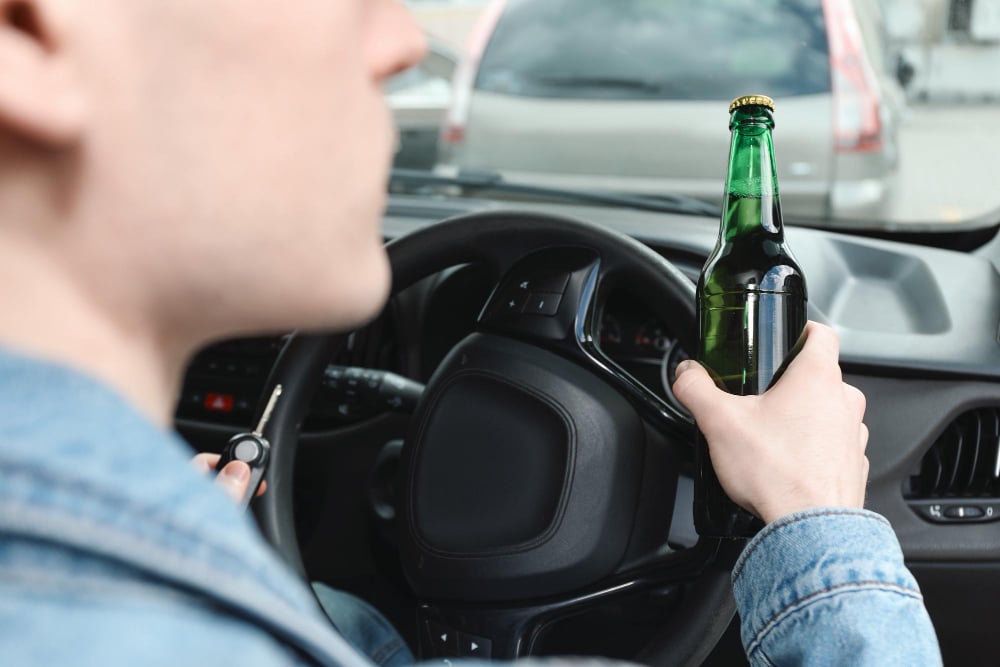
You can also do things like give a friend your keys (or just hide them from your drunk self), walk instead of drive your car, or take a taxi and/or uber to the party and back home. If you find that you can’t keep yourself from drinking and driving, we strongly recommend you stop drinking altogether. Not only will it keep you safe from punishment, but it will keep you and the other drivers around you on the road safe from harm.
When You Should Contact a DUI Lawyer in Toronto
If you’ve been charged with a DUI, we strongly recommend you get in contact with an experienced DUI lawyer in Toronto like Jonathan Lapid as soon as possible. Mr. Lapid is an experienced and successful lawyer who’s fought DUI charges for decades. With a professional on your side, you will suffer much less drinking and driving consequences.
Conclusion
Drinking and driving affects far more than your driving record. A single charge can influence your job options, your insurance costs, and even the routines you rely on every day. If you’re already facing a DUI, what happens next depends on how you respond and who represents you.
How Does Drinking and Driving Affect Your Life FAQ
-
What are the federal drinking and driving laws in Canada?
Canada’s impaired driving laws are set out in the Criminal Code, and they apply nationwide. The law makes it an offence to operate a vehicle while your BAC is 80 mg or more. Provinces can add their own administrative penalties, but the criminal charges themselves are federal. -
What are the DUI limits for Toronto?
Toronto follows the same limits as the rest of Ontario. For fully licensed drivers (G drivers), the criminal threshold is 0.08 BAC. Commercial and new drivers have lower BAC limits and can face provincial penalties for having a BAC of 0.05 or higher. -
How many drinks is 0.08?
There isn’t a reliable number of drinks that equals 0.08. Two people can drink the same amount and end up at completely different BAC levels. Body weight, metabolism, medication, and even how much you ate all play a major role. -
What happens if you’re caught drinking and driving?
Police will conduct a breath test or sobriety test at the roadside. If you fail, or if you refuse the test, you’re immediately taken into custody and brought to a police station for official testing. -
Can you travel to the U.S. after a DUI?
Not always, since the United States can deny entry to people with certain criminal convictions, including impaired driving. Even if you’ve never had issues crossing before, border officers can check your record and make the decision on the spot.